Travelling with ALS
by Amie

Amie's tips and challenges as she travelled with ALS
So, you've decided that you want to live with illness instead of sitting in a chair and watching life go by? Now what? You plan!
Where do you want to go? It's true, that some places are more accessible than others, but don't listen to the people who say, "Are you sure you want to go there? It's not very accessible!" How do they know that? People told me that about Ireland! They were wrong., I'm happy to say, people went out of their way to make sure I could get through in my wheelchair. One day when we were in Ireland, my husband went ahead to check the entrance of a pub to see if it was accessible (it wasn’t but he thought he could get me in), leaving me in the van, by the time he'd returned to the entrance with me, someone had placed a board over the steps, creating a makeshift ramp. Easy-peasy!
Before you go anywhere, do you know what it takes to make travel comfortable for you? If you are new to illness, this may not be an issue. You just hop in the car, or slowly get in your car, and go! Do you need help, do you need a wheelchair van? You can buy or rent them. Other options are a seat in your vehicle made to turn and come out of the car to your level for transfer, or a portable lift made to put a person into a vehicle.
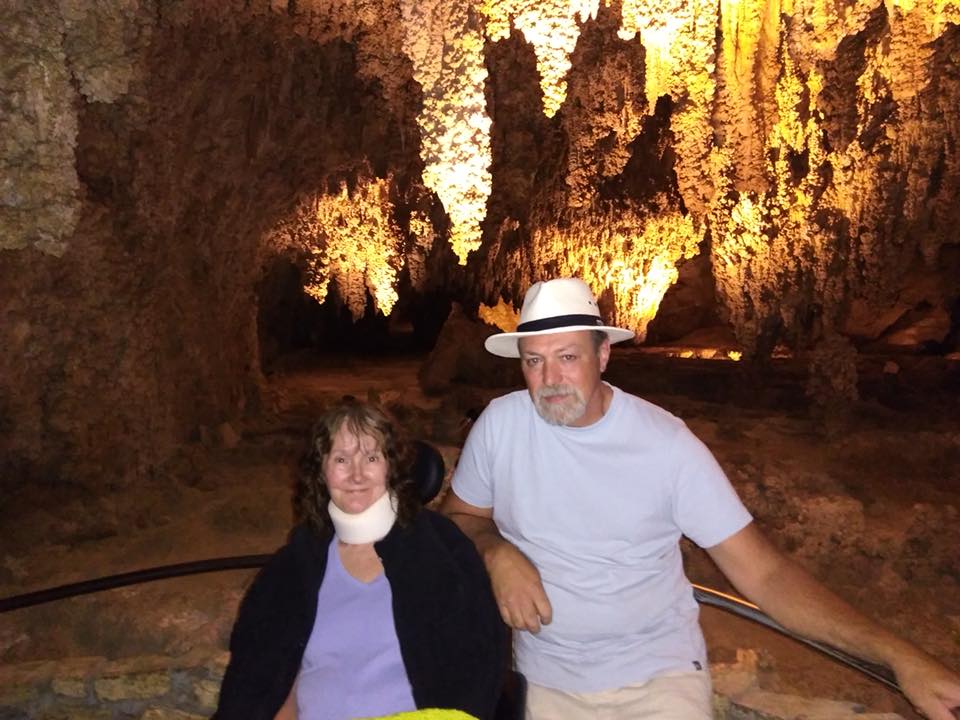
If you're like me, my husband can get me in and out, but I need some things to make sitting comfortable. I need a neck brace, so my head doesn't fall forward on quick stops. and a neck pillow. I need something to cover the metal clicker thingy (what is that called?) on the seatbelt so it doesn't rub on my arm, because I can't move my arm. Recently I've added a tiny pillow under each thigh for long rides. I sit on a memory foam cushion if I'm riding for more than an hour. In some vehicles, I need something under my feet to raise them up higher. I always have a blanket, because I'm always cold, especially in warmer months when the air conditioning is on everywhere. Most recently I've added my Bipap machine to the list.
That sounds like a lot, and I guess it is, but once you know what you need, it becomes routine, and only takes a couple of minutes to get things into place. If it's been a while since you've gone anywhere, try taking a day
trip first, or maybe a weekend trip. Maybe just take a drive for a couple of hours, or do whatever you need to do to figure out what works best for you.
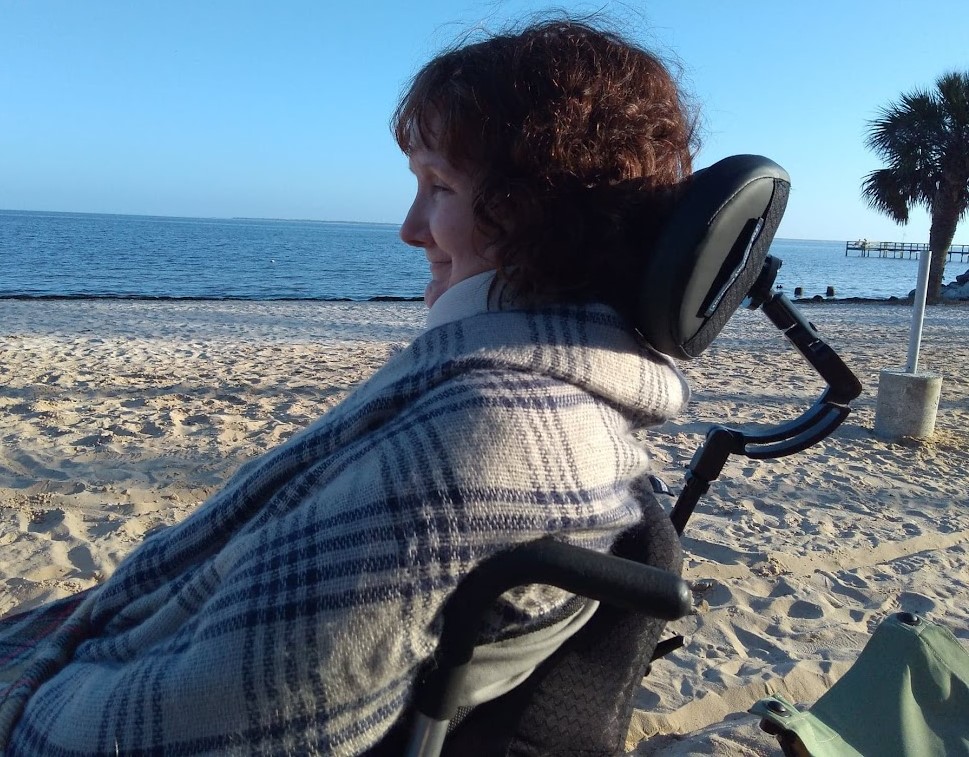
Once you have that bit sorted out, you'll need to decide where to stay. Hotels usually have accessible rooms. but not always! Also what is accessible to you, may not be accessible to whoever designed the hotel room.
Thankfully most have online photos of the rooms and bathrooms. Also know that if you book online, it's best to call the hotel (that specific hotel, not their company line) and confirm that an accessible room is held for you, especially if you'll be a late arrival. Don't ask me why, but just because you book an accessible room doesn't mean you'll get an accessible room unless you confirm ahead of time, at least in the United States. If you don't want to do that, I suggest using accessibleGO.com. It's an online reservation site. They allow you to enter your specific needs, they find the hotel /vehicle /airline options for you, and after you make your selections, they confirm everything for you. Simple and stress-free!
Okay, so you know where you're going and what you need to get there, now what to pack? This is where you'll need to make a list. First, write down all the obvious items, like clothes, shoes, pj's, toothbrush, toothpaste, comb/brush, etc... Next, think about your typical day at home, and what you use morning, noon, and night. Everything! For instance, when I'm getting ready for the day, I go to the bathroom, and I use a patient lift to get from bed to toilet. Do you use a lift? These can be rented, or they make fold-up travel lifts. Luckily, my husband can just move me, so I don't use one when we travel. He gets me out of bed, and we use my wheelchair to get to the bathroom in a hotel. When I'm in the wheelchair (or any chair) I use my lumbar pillow, so add it to the list. Next, I use face wipes to wash up, disposable and pre-soaped, so, add them to the list. I take my morning's pills/supplements, and I always use a straw to drink, so... add pills/supplements and staws to the list. On and on, think about your typical day and what you use, will you want that when you're on your trip?
A little hint, I always have a large baggie packed with napkins, plastic utensils, and straws, because how many times have you needed those in a hotel room?? If you're like me, always! There are many different blogs/sites you can check out, written by travelers who need accessibility. They are a good resource and have some great tips for traveling in a wheelchair. Curb Free With Cory Lee is an excellent resource.
Let's skip to bedtime. It's become increasingly difficult for me to be comfortable in bed. I basically sleep somewhat sitting up but reclined. At first, this had to do with my ability to breathe, now that I'm on BiPap, it’s because I'm less apt to choke when I have excess saliva (since I can't raise up on my own). I always sit or lay on a memory foam pad when I'm not in my wheelchair (which is the majority of the time), so add that to the list of what to pack.
I've found it easiest to have one large duffel bag to pack all of my pads, pillows, and blankets into. Sleeping on a memory foam pad means it doesn't matter what the hotel mattress feels like, I'll still have the comfort level I'm used to. Hint for comfort; an airplane pillow is great for propping up arms, and legs, as a lumbar cushion, etc.. Whenever my family flies, they swipe a pillow for me! Blankets too! I pack my own throw blankets for hotel stays, as regular Queen /King bedding is too big and heavy for me (even at home), I prefer small, lightweight layers. Airplane blankets are the perfect size. There was a time when I didn't think twice about taking a pillow or blanket from my air flight.
I actually thought they were considered disposable. Now I'm pretty sure they reuse them. Whenever I took them, I didn't hide the fact that I was de-planing with a pillow and blanket in hand, and I don't know if it was the wheelchair or my smile, but I've never had a stewardess say anything about it.
Once you get your list together, save it! You don't want to go through this every time you go somewhere. I have mine saved on my computer, which makes it easy to make changes as needed and add things I may have forgotten for the next trip. After you've packed, you're ready to go! Remember, things may not always go perfectly when traveling, but you can usually make do if necessary, Also, every trip gets easier. After a couple of trips, things will go more smoothly. Just take your time and have fun! Don’t let illness stop you from enjoying your life.